
OUVSERĀ | MIA M. NOR
"I disrupt polish to make room for discovery. I'm not interested in things revealing themselves all at once. I want the work to be something you return to, where new details show up each time you look "
About Mia M. Nor
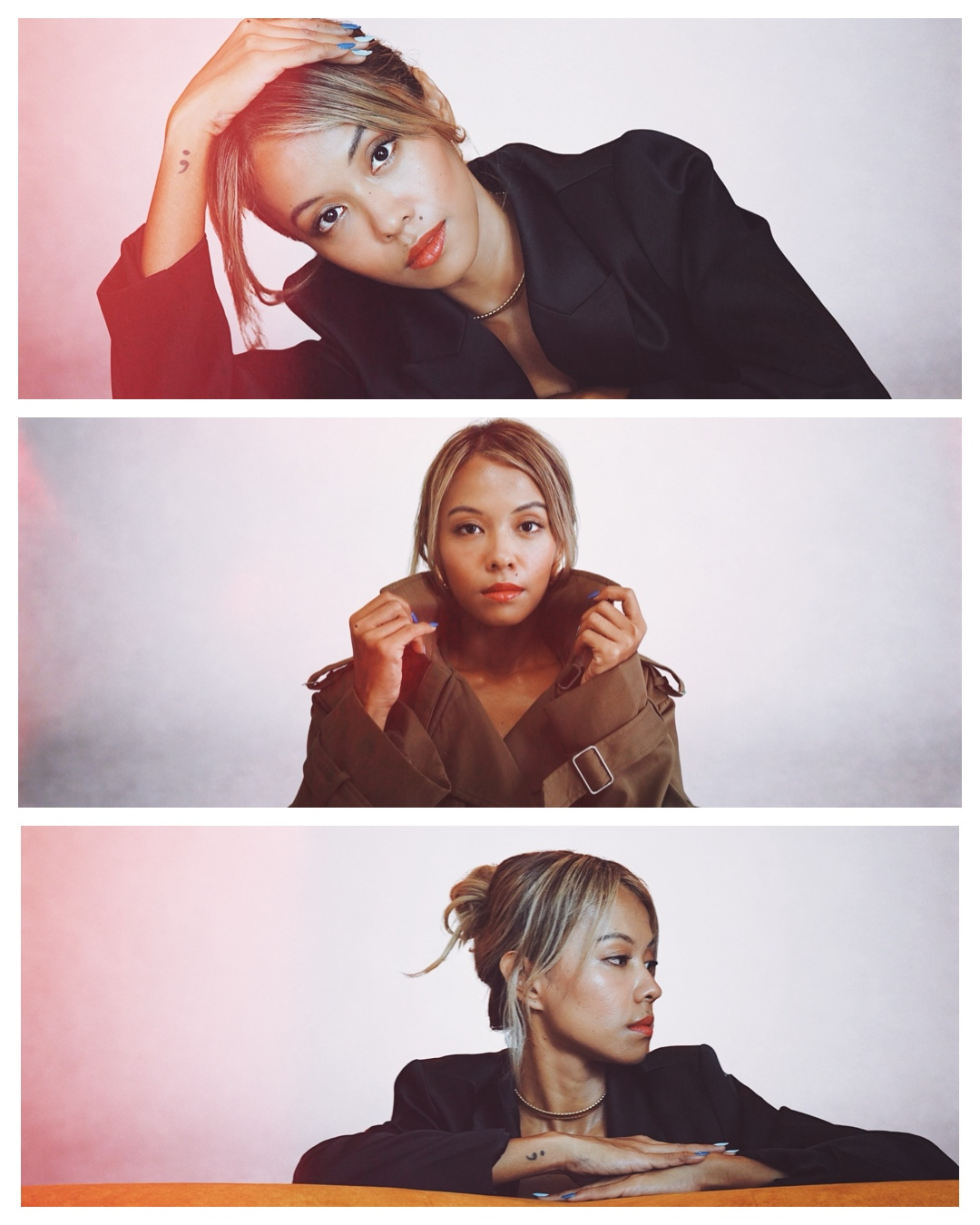
Artist Philosophy
In a world obsessed with clarity, productivity, and conclusions, my work chooses slowness and attention instead. It lingers on what we usually rush past—doubt, contradiction, longing, fatigue, hope—treating them not as problems to solve but as evidence of living, whether it offers comfort or discomfort or everything all at once. The act of making becomes an ethical stance: to look, to feel, and to stay. In this refusal to tidy experience into answers, the work intends to ask a purposeful question: “What if meaning is not something we arrive at, but something we learn to keep company with?”
Core Influences
Mia M. Nor is driven more by curiosity than by conclusions. Her work is shaped by what she personally experiences, reads, listens to, wears, observes, and questions, drawing from literature and music, fashion and travel, nature, female empowerment, mental health, and the social and political climates we often move through without fully naming. She is drawn to what is authentic, imperfect, raw, and unresolved, valuing beauty as honesty rather than polish. Existential reflections on meaning, freedom, free will, and selfhood surface naturally in her process—not as abstract theory but as lived inquiry. For Mia, creating is a way of thinking out loud: an ongoing conversation between intuition, experience, and the world as it is.
Creative Process
Conception & Ideation
Each work begins with a question rather than an answer and ideas emerge through reading, writing, visual research, and mental note-keeping rather than fixed sketches.
Material Exploration & Intuitive Experimentation
Before committing to form, materials are tested intuitively. Colour relationships, textures, and surfaces are explored freely, allowing emotion and instinct to guide early decisions.
Surface Building & Narrative Development
Layers are accumulated, disrupted, and reworked. Through repetition, erosion, and mark-making, the work begins to hold tension, memory, and narrative, remaining open rather than resolved.
Refinement, Editing & Direction
The work is paused, observed, and edited. Decisions are gradually made on what to retain, obscure, or remove, ensuring conceptual and visual coherence.
Articulation, Presentation & Delivery
The final stage involves writing, photographic documentation, image editing, and curatorial framing. Works are contextualised through text, sequencing, and presentation, allowing them to exist clearly yet openly for interpretation.
